
Ventus One vs Ventus One Plus: Which Electric Bike Is Right for You?
If you’re comparing the Ventus One vs Ventus One Plus, the first thing to understand is that this isn’t simply a choice between a slow model and a faster model.
Both machines are built around the high-performance Ventus platform, with a 72V electrical system, 50Ah battery and up to 28kW of peak power. The Ventus One Plus V1+ takes that foundation and focuses its upgrades on areas such as suspension, braking, wheels and drivetrain durability.
That makes the decision more interesting. Do you need the established Ventus One platform, or are the additional chassis and component upgrades of the V1+ worth choosing?
In this guide, we’ll compare the two models to help you understand the differences.

Ventus One vs Ventus One Plus: Quick Comparison
At first glance, the core performance figures are remarkably similar. The biggest changes become clearer when you look beyond peak power.
| Specification | Ventus One | Ventus One Plus V1+ |
|---|---|---|
| Peak Power | 28,000W | 28,000W |
| Battery | 72V 50Ah | 72V 50Ah Samsung-cell system |
| Driving-Wheel Torque | 390 N·m | 390 N·m |
| Published Max Speed | 130 km/h / approx. 81 mph | 130 km/h / approx. 81 mph |
| Front Suspension | Fastace 12RV | Upgraded RFloXa fork |
| Rear Suspension | 79Bike i2 setup | RAB50RC rear shock |
| Braking | Hydraulic braking system | Upgraded large-piston DOT braking system |
| Wheels | Wire-spoke setup | Reinforced straight-pull spoke design |
| Drivetrain | Belt drivetrain | Gen 2 carbon-fiber belt and carbon-steel pulley |
What Is the Ventus One?
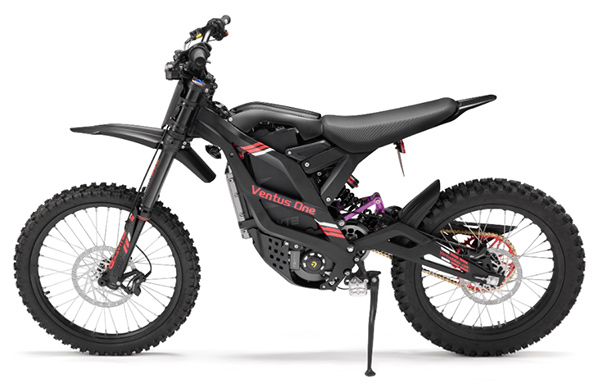
The Ventus One is the foundation of the platform. It combines a high-output electric powertrain with a forged aluminum chassis, long-travel suspension and a large 72V battery system.
Its published specification includes up to 28,000W peak power, 390 N·m of driving-wheel torque and a maximum speed specification of approximately 81 mph.
The platform also includes modern electronic features such as selectable power settings, a multifunction display, Bluetooth connectivity and keyless unlocking.
For a deeper breakdown of the bike, read our complete Ventus One plus electric bike components .
What Is the Ventus One Plus V1+?
The Ventus One Plus V1+ builds on the same basic performance philosophy rather than replacing it with an entirely different machine.
The major story with the Plus is refinement.
Ventus retained the high-output 72V powertrain while upgrading several components that become increasingly important when a bike is ridden hard: suspension, brakes, wheels and drivetrain hardware.
This makes the V1+ particularly interesting for riders who already like the performance proposition of the original Ventus One but want a more developed component package.
You can view current product information on our Ventus One Plus V1+ product page .

Power: Is the Ventus One Plus Faster?
This is probably the most important misconception to clear up when comparing the Ventus One vs Ventus One Plus.
The V1+ is not primarily an upgrade built around dramatically increasing the headline peak-power figure.
Both product specifications list 28kW peak output.
That means riders should look beyond wattage when deciding between them. A motorcycle or electric dirt bike is a complete system. Suspension, braking, wheel strength, drivetrain behavior and chassis control all affect how confidently available power can be used.
Battery: Both Use a 72V 50Ah Platform
Both models are built around a 72V 50Ah battery system. The V1+ product specification identifies Samsung cells in its battery pack.
The published V1+ range is up to approximately 71 miles under the specified conditions.
As with any electric vehicle, real-world range can vary substantially according to speed, rider weight, terrain, elevation, temperature, tire pressure and acceleration.
If you’re researching replacement or additional power systems, visit our Ventus battery collection .
Suspension: One of the Biggest V1+ Upgrades
Suspension is one of the clearest differences between the two configurations.
The standard Ventus One specification uses a Fastace 12RV adjustable front fork and 79Bike rear suspension setup.
The Ventus One Plus moves to an upgraded RFloXa front fork and RAB50RC rear shock.
Why does that matter?
Suspension affects far more than comfort. On a high-output machine, suspension behavior can influence traction, stability, braking behavior and the rider’s ability to maintain control over uneven terrain.

Brakes: V1+ Gets a More Serious Setup
More powerful riding demands dependable braking.
The Ventus One Plus introduces a larger-piston braking system using DOT fluid together with larger brake pads.
The objective is improved braking consistency and better resistance to fade during demanding riding.
This is particularly relevant because repeated high-speed braking converts significant kinetic energy into heat. Managing that heat is an important part of maintaining predictable braking performance.
Wheels: Straight-Pull Spokes on the V1+
Ventus also revised the wheel design for the One Plus.
The V1+ uses a straight-pull spoke configuration intended to improve wheel strength without creating a substantial weight penalty.
For riders tackling rough terrain, wheel durability matters. Impacts, landings and repeated high-load riding place considerable stress on rims, hubs and spokes.
This is another example of the V1+ concentrating its upgrades on supporting the performance already available from the powertrain.
Drivetrain: Gen 2 Carbon Fiber Belt
The drivetrain has also received attention.
The Ventus One Plus uses a Gen 2 carbon-fiber belt system paired with a carbon-steel pulley.
Belt drives can provide several benefits in electric applications, including quiet operation and reduced routine maintenance compared with some conventional chain arrangements.
For the V1+, the revised system is intended to improve resistance to wear and stretching under high torque loads.

Technology and Tuning
The Ventus platform isn’t only about mechanical hardware.
The V1+ retains the Ventus app-based tuning approach, allowing supported settings such as throttle response, regenerative braking and power delivery to be configured.
That flexibility can be particularly useful on a powerful electric platform because maximum power is not necessarily the ideal configuration for every surface or riding situation.
Which One Should You Choose?
Choose the Ventus One If…
- You want the core 28kW Ventus performance platform.
- You don’t specifically need the V1+ component upgrades.
- You plan to customize parts yourself over time.
- The standard Ventus One better fits your budget.
Choose the Ventus One Plus V1+ If…
- You want the more developed factory component package.
- Upgraded suspension is important to you.
- You want the larger DOT braking setup.
- You value the reinforced wheel design.
- You want the Gen 2 carbon-fiber belt drivetrain.
- You expect to ride the bike aggressively and value those supporting upgrades.
Don’t Forget About Local Electric Bike Laws
One important consideration applies to both models: these are extremely high-powered machines compared with conventional low-speed electric bicycles.
Electric-bike definitions and riding rules vary by state and location. Where you can legally operate a particular electric vehicle may depend on its equipment, power, speed capability and how local law classifies it.
Before riding on public roads, bicycle infrastructure or public trails, check the rules applicable to your location.
A useful independent resource is PeopleForBikes’ State-by-State Electric Bike Laws .
High-Power Electric Bike Safety
With either Ventus model, performance should be matched by responsible operation and maintenance.
Riders should routinely inspect important components including tires, brakes, suspension hardware, wheels and drivetrain components.
Battery and electrical-system safety are equally important. Use appropriate charging equipment, follow manufacturer instructions and avoid using damaged battery packs or chargers.
For additional independent information about lithium-ion battery and micromobility electrical safety, visit the U.S. Consumer Product Safety Commission .
Ventus One vs Ventus One Plus: Final Verdict
The Ventus One vs Ventus One Plus decision ultimately comes down to what you value beyond the headline power figure.
The original Ventus One provides the core high-performance platform: 28kW peak output, a 72V 50Ah battery system, adjustable suspension and the electronic technology that defines the Ventus riding experience.
The Ventus One Plus takes that formula and concentrates on refinement. Its upgraded suspension, braking system, straight-pull wheels and revised belt drivetrain make it the stronger choice for riders who want those performance-supporting components installed as part of the factory package.
Neither decision should be based on wattage alone. Consider your terrain, experience, riding style, budget and the component package you actually need.
Compare Ventus Electric Bikes
Explore both models, review their current specifications and choose the Ventus platform that best matches your riding requirements.
Frequently Asked Questions
What is the main difference between the Ventus One and Ventus One Plus?
The V1+ retains the core high-performance Ventus powertrain while introducing upgrades to suspension, brakes, wheels and drivetrain components.
Is the Ventus One Plus more powerful than the Ventus One?
Both current product specifications list up to 28,000W of peak power. The primary V1+ improvements are therefore focused on supporting components rather than simply increasing the peak-power number.
What battery does the Ventus One Plus use?
The V1+ is specified with a 72V 50Ah lithium battery using Samsung cells.
How fast is the Ventus One Plus?
The published maximum-speed specification is 130 km/h, or approximately 81 mph. Real-world performance can vary with conditions and configuration.
Does the Ventus One Plus have upgraded suspension?
Yes. The V1+ product configuration includes an upgraded RFloXa front fork and RAB50RC rear shock.
Where can I buy the Ventus One or Ventus One Plus in the USA?
Both models can be explored through the Ventus One Bikes USA online store, where you can review available bikes, components and current product information.